
Therapy for Therapists in Texas
I offer online therapy for texas therapists navigating burn out, anxiety &the exhaustion from being the one who holds everything together
ARE YOU PRIORITIZING YOU?
You spend your days holding space for everyone else. You guide your clients through their struggles while somehow finishing your notes in a 'reasonable' amount of time, drinking enough water (but not enough to have your bladder explode during a session), and trying to negotiate with insurance companies that exist solely to test your emotional regulation skills. Then, you drive home and want to collapse onto your couch scrolling social media. But, you can’t because there’s dinner to make, relationships to maintain, appointments to schedule, and approximately 47 other things competing for your attention.
But who holds space for you? Maybe you noticed that you’re dreading the start of each morning, your patience is thinner, your compassion is running on fumes, and every email notification makes you want to throw your phone into the nearest body of water. You know the signs of burnout, but, it’s frustrating that you can’t seem to practice what you preach to your own clients. Unfortunantly, being really good at helping other people doesn't automatically make you good at taking care of yourself. And that's where I come in.
At Sage Holistic Counseling, I specialize in helping therapists like you recognizine and interrupt patterns that drain your energy so you can build a more sustainble relationship with your work & rediscover joy outside of it.
Is it Supposed to Be this Hard?
THERAPY FOR THERAPISTS IS MY SPECIALTY, NOT AN AFTERTHOUGHT
Therapy for therapists isn't just another service on my website. Supporting the people who spend their lives supporting everyone else is the heart of my practice.
I know what it's like to enter this profession wanting to make a difference, only to discover that the very systems we're supposed to help people heal within are often the same ones burning us out. The impossible caseloads. The expectation that compassion means unlimited capacity. The guilt when you start resenting work you once loved. And the quiet, uncomfortable question you don't want to say out loud: What if I can't keep doing this?
You don't need another therapist who understands burnout in theory. You need someone who understands what happens when your identity, your livelihood, and your sense of purpose are all tangled up in being the person everyone else depends on.
Because the goal isn't to make you better at tolerating a life that's slowly exhausting you. It's to help you build one you don't have to recover from.

My Approach & What makes me different
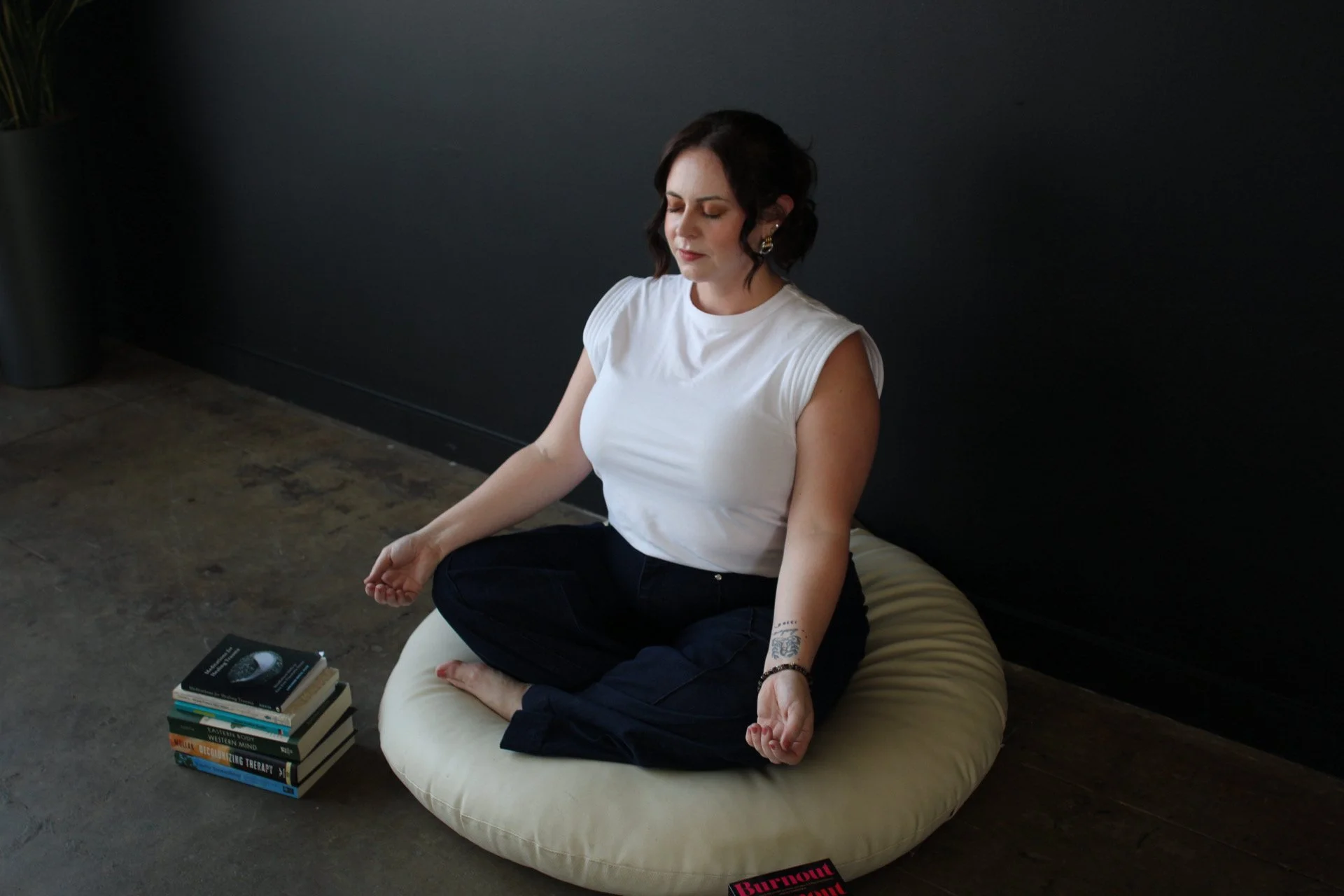
I create a space where you do not have to be the therapist in the room. You spend the rest of your day being okay for everyone else. In this hour, you do not have to pretend.
I've been the therapist with an impossible caseload, trying to be everything to everyone while quietly wondering how much longer I could keep doing it. I know what it's like to love this work and resent what it asks of you. To enter a profession because you genuinely want to help people, only to realize that the people doing the helping are often the ones being asked to sacrifice the most. I didn't build my practice around supporting therapists because it sounded like a good niche. I built it because I know what happens when the helpers have nowhere to turn.
And because you're a therapist, there's a good chance you already know why you do what you do. You can identify your attachment patterns, explain your people pleasing tendencies, and probably give a beautiful psychoeducation lesson on the importance of boundaries.
But knowing why you're exhausted doesn't make you any less exhausted. And being able to explain your patterns doesn't mean you've learned how to interrupt them. That's where our work goes deeper.
I use EMDR, somatic approaches, and mindfulness to explore what insight alone hasn't changed. We might look at why disappointing someone feels unbearable, why your body treats rest like a threat, or why you keep volunteering to carry responsibilities that were never yours. I'm interested in what happens between knowing you deserve boundaries and actually holding one when someone is upset with you. You don't need another hour of talking about what you should be doing differently. You need room to understand why doing it differently is so hard.
And we're not going to pretend that your burnout exists in a vacuum. We can acknowledge the impossible expectations, broken systems, and emotional labor that come with this profession without making you personally responsible for fixing all of it. The goal isn't to help you become better at carrying everything. It's to help you recognize what was never yours to carry in the first place.
Together, we'll work toward a life where you can care deeply about your clients without abandoning yourself, set boundaries without drowning in guilt, and experience rest without feeling like you have to earn it.
You already know how to show up for others.
This is where you learn how to do that for yourself.

What THE WORK LOOKS LIKE WITH AUBREY
No performing. No overexplaining. No pretending you have it all together.
Therapy, especially as a therapist, is a different kind of work. You spend your professional life helping people identify their patterns, regulate their emotions, and make difficult changes. So the last thing you need is another hour of someone explaining the importance of boundaries or reminding you to practice self-care.
You already know the material. We're here to figure out why it's so damn hard to apply it to your own life.
I'm going to be compassionate & I’M going to challenge you.
I'm not interested in nodding along while you explain, for the fifth time, why you absolutely had to take on another responsibility that was never yours in the first place.
We'll get curious about the patterns underneath those decisions. The guilt that follows saying no. The fear of disappointing someone. The belief that being needed is the same thing as being valued.
And yes, sometimes we'll have to acknowledge that you are participating in the very dynamics that are exhausting you.
Not because you're doing something wrong, but because understanding a pattern and changing a pattern are two very different things.
You don't have to take care of me.
You can be angry, overwhelmed, resentful, exhausted, or completely unsure what you need. You can cry, swear, sit in silence, or admit that you're starting to dread the work you once loved.
You don't have to make your feelings more palatable, soften your language, or check whether I'm okay hearing what you have to say.
I can take care of myself. Promise.
We're going to get out of your head.
You probably have enough insight to write your own case conceptualization. But insight alone doesn't necessarily change what happens when your nervous system interprets someone's disappointment as an emergency. Depending on your needs, I integrate EMDR, somatic approaches, mindfulness, EFT/tapping, and DBT-informed skills to help you work through the experiences, beliefs, and emotional responses that keep these patterns in place.
Sometimes that means processing old experiences. Sometimes it means learning to tolerate the discomfort of setting a boundary. Sometimes it means noticing that your body has absolutely no idea what to do when nobody needs anything from you. The goal isn't more insight for your collection. It's change you can actually experience.
We're going to make room for a life outside of being useful.
Your value is not measured by how many people need you, how much you accomplish, or how well you can hold everything together while quietly falling apart. We'll work on building boundaries that don't require an elaborate explanation, relationships where you're allowed to have needs, and a relationship with work that doesn't consume every ounce of your energy.
And we're not going to pretend that changing these patterns is always comfortable. Sometimes choosing yourself means disappointing people who benefited from you never having boundaries in the first place. You can be a deeply compassionate, committed therapist without sacrificing yourself to prove it.

This work TAKES time, intention & practice
Some changes may come quickly. Others will require us to challenge beliefs and behaviors you've spent years developing. But we're not trying to turn you into a completely different person.
We're working toward a version of your life where being good at taking care of others no longer comes at the expense of taking care of yourself.
Frequently Asked Questions About
Therapy for Therapists in Texas
-
Because being the one who holds space for everyone else does not mean you do not need a place to fall apart.
You can recognize burnout in your clients, explain the importance of boundaries, and help someone work through their deepest wounds while quietly struggling with those very same things yourself.
Knowing how to help someone else heal doesn't mean you have to figure out your own healing alone.
Therapy gives you a place where you don't have to be the expert, manage someone else's emotions, or have all the answers. You get to be a person, not a professional.
Want to explore this a little further? I've written about it here:
I Will Die on this Hill: Therapists Should Be in Therapy
-
Therapy for therapists is different because we're not starting from scratch. You already understand the language of mental health, recognize unhealthy patterns, and probably spend your entire workday helping other people make changes you're struggling to make yourself.
The challenge usually isn't a lack of insight. It's figuring out why all that insight hasn't translated into change.
Because working with therapists is the heart of my practice, I understand the realities of this profession beyond the textbook. The impossible caseloads, emotional labor, documentation demands, ethical responsibilities, and the complicated relationship between loving your work and resenting what it asks of you.
We can explore how perfectionism, overfunctioning, people pleasing, and professional identity show up in your personal life without pretending that your burnout is simply a failure to practice self-care.
You don't need another therapist to teach you what boundaries are. You need someone who can help you understand why setting them feels so damn hard.
-
as a therapist yourself, you already know how important it is to find someone you genuinely connect with.
My style is warm, direct, compassionate, and occasionally a little irreverent. I'm not afraid of the uncomfortable conversations about resentment, grief, burnout, identity, or the parts of yourself you've gotten really good at hiding behind being the capable one.
I'll laugh with you, sit with you in the hard stuff, and gently (or sometimes not so gently) challenge the patterns that are keeping you stuck. I'm not going to nod along while you intellectualize your way around something painful, but I'm also not going to push you somewhere you're not ready to go.
If you're looking for a therapist who will both validate your experiences and lovingly call you on your bullshit, we might be a good fit.
Want to get a feel for my personality before we meet? You can watch my video about what it's like to work with me.
And if something resonates, book a free 15 minute consultation. We can talk about what you're looking for, answer your questions, and see whether working together feels right.
-
First, feeling guilty doesn't automatically mean you're doing something wrong.
If you've spent years being the dependable one, the accommodating one, and the person who makes sure everyone else is okay, prioritizing yourself might feel downright selfish.
And sometimes, the guilt isn't even about doing something wrong. It's about doing something different.
You're disappointing someone. You're letting a text go unanswered. You're saying no when every part of you wants to explain why you can't say yes. You're allowing someone else to experience discomfort without immediately rushing in to fix it.
And your nervous system is acting like you've committed a felony.
Here's what we'll work on together: understanding where that guilt comes from, learning to tolerate the discomfort of disappointing people, and recognizing that someone else's disappointment is not automatically your responsibility to resolve.
You can care deeply about people without abandoning yourself in the process.
-
get it. Between back-to-back sessions, documentation, managing your caseload, and approximately 47 other responsibilities, adding another appointment to your calendar might sound like the last thing you need.
And I'm not going to tell you to "just make time for yourself" as though you haven't already considered that.
But I am going to ask you something: How long have your own needs been the first thing you sacrifice when life gets busy?
Sometimes the problem isn't that you need better time management. It's that you've built a life where everyone else's needs have a permanent reservation on your calendar, and yours are perpetually on the waitlist.
Therapy isn't about giving you another thing to accomplish. It's about figuring out why you're carrying so much in the first place, what can actually come off your plate, and how to create room for yourself without feeling like everything else will fall apart.
You deserve support that doesn't require you to reach your breaking point before you make room for it.
-
It might. But I want to challenge the idea that becoming a better therapist has to be the reason you seek therapy in the first place.
Yes, doing your own work can help you recognize when you're overidentifying with clients, rushing to rescue someone from discomfort, or carrying emotional responsibilities that were never yours to hold. It can help you become more aware of your own patterns, more comfortable with difficult emotions, and more intentional about how you show up in the therapy room.
But can we talk about how even your own healing has somehow become another professional development opportunity?
You spend enough of your life worrying about whether you're doing enough, giving enough, and being enough for the people who depend on you.
Your therapy doesn't need to be another exercise in becoming a more effective helper.
Maybe it helps you become a more grounded clinician. Maybe it helps you establish boundaries that make your career sustainable. Maybe it helps you reconnect with the parts of yourself that have absolutely nothing to do with being a therapist.
You don't have to justify taking care of yourself by explaining how it will benefit everyone else.
You get to do this for you.
-
As a therapist, seeking therapy can feel like admitting failure. You might worry about being judged by peers or even fear that it could impact your referrals or business reputation. The stigma within the mental health field about clinicians seeking help themselves can amplify these fears, making it feel like an unspoken taboo. You might wonder if admitting your struggles means you’re not good at your job or question whether clients or colleagues will perceive you differently, especially if you are an early-career therapist. But seeking support isn’t a sign of weakness; it’s a courageous step toward resilience, growth, and ultimately becoming a more effective and balanced clinician.