Are You Helping... or Enabling? A Worksheet for Overfunctioners
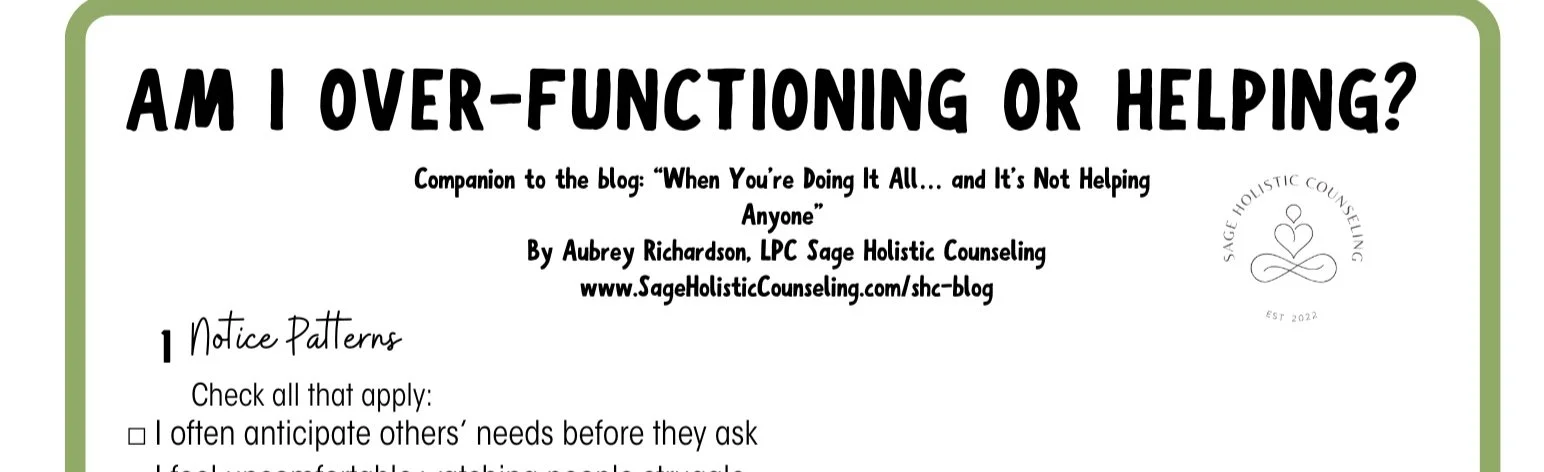
A sneak peek of the downloadable worksheet: Am I Over-Functioning or Helping?
When Kindness Keeps Others (and You) Stuck
If you’re the one everyone counts on—and you’re starting to wonder why you’re the only one holding it all together—this is for you. You might be stuck in a cycle of over-functioning that feels like kindness... but actually keeps everyone else from growing.
In my work providing therapy for therapists in Texas, I hear it all the time:
"If I don’t do it, no one will." "I just want to make it easier for them." "I know they didn’t ask for help, but I didn’t want them to struggle."
It sounds like love. It sounds like care. But over-functioning—doing more than your fair share emotionally, mentally, or practically in relationships—isn't the same as being helpful. It's enabling.
And enabling doesn’t just hurt others. It burns you out, too.
The Cost of Over-Functioning
Over-functioning might look like:
Anticipating others’ needs before they even express them
Jumping in to fix things before others have a chance to try
Feeling anxious when people struggle
Equating your worth with how useful or needed you are
While these habits often begin in childhood or early caregiving roles, they can show up later in life—especially for therapists, healthcare providers, and high-achieving helpers.
The tricky part? It’s socially rewarded. You’re seen as responsible, kind, capable. But behind the scenes, you’re exhausted. You’re silently resentful. And your relationships often feel one-sided or unbalanced.
Over time, this dynamic not only keeps others from stepping up—it keeps you from stepping back.
Helping vs. Enabling: What’s the Difference?
Helping is empowering. It supports someone in becoming more resilient, competent, and self-aware.
Enabling is rescuing. It removes discomfort, bypasses growth, and fosters dependence.
One comes from respect. The other, from fear: fear that if you don’t fix it, you’ll be rejected, blamed, or seen as selfish.
That’s not kindness. That’s self-abandonment disguised as care.
A Tool for Change: The Over-Functioning + Enabling Worksheet
You don’t have to figure this out on your own.
This free worksheet is designed to help you:
Identify where you may be over-functioning in your relationships
Get curious about your motivations (fear, guilt, habit?)
Reflect on how your actions might be unintentionally enabling others
Begin practicing small, compassionate boundaries
This is not about judgment—it’s about awareness. Because awareness is where change begins.
👉 Download the Over-Functioning & Enabling Worksheet here
Use it as journal prompts, therapy discussion starters, or boundary check-ins when you feel yourself sliding back into old roles.
Boundaries Aren’t Cruel—They’re Clarity
When you stop doing it all, it might feel uncomfortable. You may feel guilty. Others may not love the new limits at first.
But here’s what else happens:
You gain energy and time for yourself
You stop resenting the people you love
Others begin to take ownership of their own lives
Boundaries aren’t the end of care—they’re the beginning of healthier, more mutual relationships.
Ready to Stop Doing It All?
If you’re realizing that your helping has crossed into enabling—and you’re ready to step back without falling apart—I’d love to support you.
I work with therapists, caregivers, and overachievers in Texas who are ready to stop over-functioning, release perfectionism, and build lives that are grounded, not performative.
✨ Book a free consultation through the Contact tab of my website or at click here.
You don’t have to be everything for everyone. You’re allowed to just be you.
📥 Download the Over-Functioning & Enabling Worksheet
📍 Read more blogs at: www.SageHolisticCounseling.com/shc-blog