Burnout Myth Presentation Recap: The System is Broken, Not You
Burnout is everywhere in helping professions, whether you’re a therapist, nurse, teacher, social worker, or caregiver. Too often, it’s framed as a personal failure: you’re not resilient enough, you need better boundaries, you should practice more self-care. But here’s the truth: the system is broken, not you.
This was the focus of my recent Burnout Myth Presentation at Genesis, where I unpacked the harmful narratives that keep helpers stuck and explored what it really takes to heal. If you couldn’t attend in person, you can watch the full presentation on YouTube.
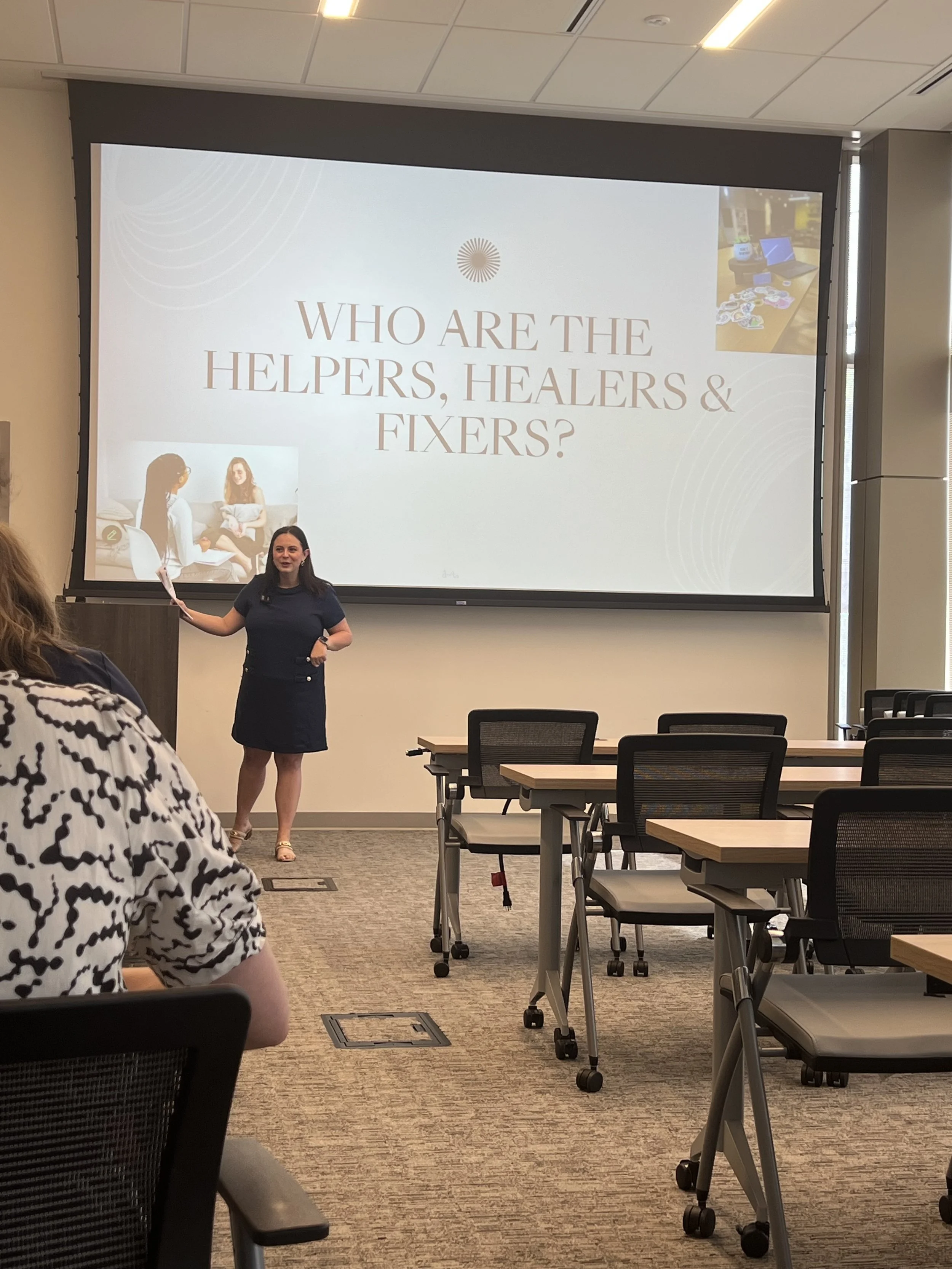
The Burnout Myth in Helping Professions
Burnout has long been misunderstood as a personal weakness. Helping professionals are advised to meditate more, take time off for vacations, and develop their resilience skills. In reality, that will never fix their burnout. Burnout is the result of impossible workloads, underfunded systems, and cultural expectations that demand constant giving without replenishment. If individuals are the cause and hold the solution for the burnout, then the exploiting and broken systems get to continue without having to change. For therapists and helping professionals, this narrative compounds guilt and makes recovery harder. When falsely placing the locus of control on the helping professional’s shoulders, narratives around ‘not being enough’ can trigger old, dysfunctional relationship patterns.
As I was navigating a divorce and a caseload with 35 clients/week, I told my supervisor I was feeling burned out. Before our conversation, I was nervous and afraid of her response; I didn’t want to be seen as unprofessional or whining. I didn’t provide all of the details of my personal situation, but asked if we could work towards a different solution. I was told that “other therapists have no problem with the caseload” and that if I dropped down to part-time hours, I would lose access to my PTO, health insurance (which I would need during post divorce), and matching retirement contributions. I left the meeting feeling deeply ashamed and like I needed to work harder.
Why Self-Care Isn’t Enough
Many years later, I know that I didn’t need to be more resilient; I was already showing up for my entire caseload every week while navigating a divorce and moving after hours. I didn’t need to take a vacation only to return to the same daunting schedule. Instead, I needed to stop the cycle of systemic emotional neglect from a broken system and find more supportive people in my life.
We’ve all heard the bad advice before: “Just take a bubble bath, meditate, or practice more yoga.” While self-care has its place, it cannot undo systemic neglect or workplace exploitation. Framing burnout as something that can be “fixed” with more effort only reinforces shame for helpers who are already doing everything they can. Popular self-care advice ignores the fact that burnout is a public health issue and an epidemic among healthcare and helping professionals. Generic and ‘Instagram worthy’ self-care advice like ‘take a deep breath’ ignores structural problems, underfunding, exploitation, and the impact of capitalism/patriarchy/ableism (and every other -ism). We cannot meditate our way out of generational trauma, and “treat yourself” is just a capitalist society benefiting from our burnout while selling us a product to cure the problem. Self-care is supposed to be self-soothing and preventative, not a cure-all for systemic problems.
The Missing Piece: Community Care
The real antidote to burnout is not found in isolation but in connection. Community care shifts the focus from individual responsibility to collective support. Peer consultation, shared advocacy, and supportive workplaces are essential for true burnout prevention and repair.
Community care is integrative, systemic, and done with others; it is what we do with and for one another. It reinforces the idea that it isn’t about one person, but is about every person. Community care is about being supported while also supporting others. Overall, community care is the missing component of burnout prevention and repair. Examples of community care include:
Peer consultation and supervision groups
Shared advocacy and workplace change
Co-working spaces or therapist collectives
Rotating check-ins or bartering for consultations
Practical help like meal trains, community pantries, or resource swaps
Collective action, such as voting, policy advocacy, or protesting
If burnout is a systemic problem, then it will take an entire community to create change.
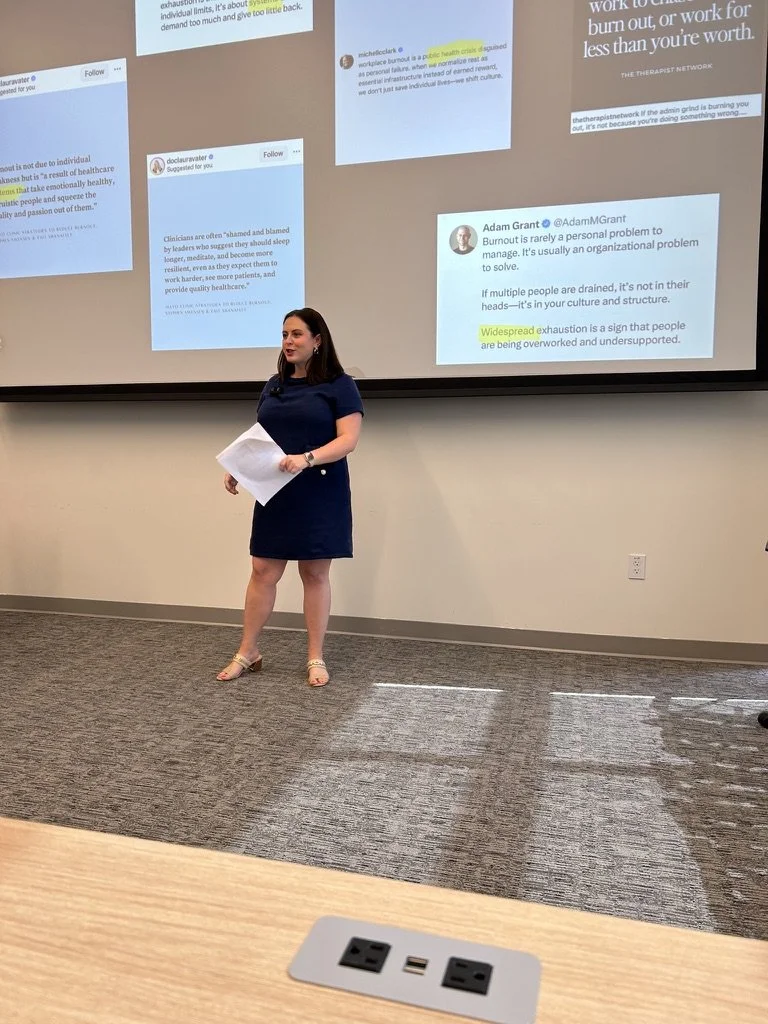
Why This Matters for Therapists and Helping Professionals
Burnout does not just drain your energy. It affects your professional identity, your relationships, and even your sense of self. For those of us in helping professions, the cost of burnout is far more than fatigue at the end of the day.
As therapists, nurses, teachers, social workers, and caregivers, so much of your identity is tied to being the one who shows up, who fixes, who supports, who holds it all together. When burnout takes hold, it can shake that identity and leave you questioning whether you are still capable, compassionate, or “good enough” in your role.
The effects ripple outward into your relationships. You may notice irritability with loved ones, pulling away from friends, or feeling emotionally unavailable even to the people who matter most. Burnout does not stay at work. It seeps into every corner of your life.
It also impacts mental health in profound ways. Anxiety, depression, compassion fatigue, and even trauma symptoms can emerge or worsen under the weight of chronic burnout. And yet, the myth persists that asking for help is a sign of weakness.
The truth is that seeking help, setting boundaries, and building sustainable practices are not failures. They are acts of survival. They are choices that ensure you can continue to do the work you care about without losing yourself in the process. Recognizing your limits and leaning into support is not stepping back from your role as a healer. It embodies it more sustainably.
Conclusion & Call to Action
Burnout is not a sign that you’ve failed; it’s proof that you’ve been carrying too much in a system that was never designed to support your well-being. You don’t need more guilt or another “self-care checklist” sold by some Instagram therapist. What you need is compassion, community care, and a reminder that your worth is not defined by how much you can endure.
If you’re a therapist, nurse, teacher, social worker, or caregiver who is tired of surviving on fumes, you don’t have to keep doing this alone. I help helping professionals reclaim their energy, set boundaries that stick, and find sustainable ways to thrive.
👉 Book a consultation with me today and let’s start building a life beyond burnout.