Burnout Feelings Sort: Naming What Burnout Really Feels Like
Burnout is not always easy to describe. For many therapists, nurses, teachers, social workers, and caregivers, the experience is less about one clear symptom and more about a messy mix of exhaustion, resentment, and emotional depletion. That is why I created the Burnout Feelings Sort Worksheet, a visual and interactive tool designed to help helpers identify and name what burnout feels like in the moment with a little bit of levity to make the conversation easier to approach. By giving language and imagery to the lived experience of burnout, this worksheet makes it easier to check in with yourself, reduce shame, and recognize when it is time to reach for support.
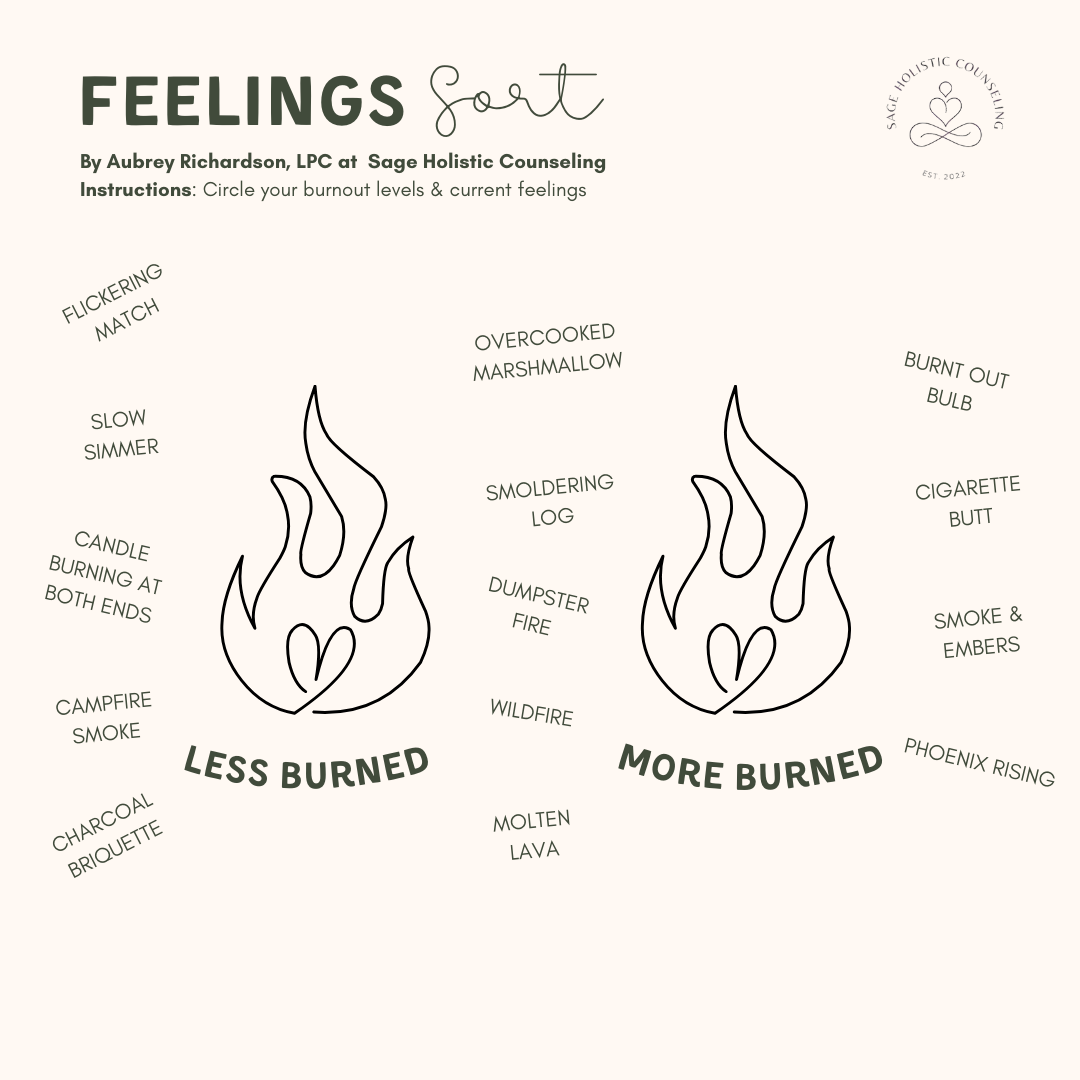
Burnout Feelings Sort Worksheet created by Aubrey Richardson showing fire illustrations with labels like flickering match, dumpster fire, and phoenix rising to help identify burnout levels.
Why Helpers Struggle to Name Burnout
In helping professions, burnout is often minimized or reframed as “stress” or “just part of the job.” Many professionals learn to push through, keep quiet, and put everyone else’s needs first. In fact, many helpers hear from leaders that they need to ‘self-care’ even more to feel better, which feels impossible. I have found that most will cope by denying and minizing the signals from their body that it’s time to re-evaluate. As a result, they rarely stop to ask themselves: What am I really feeling right now?
Naming burnout matters because:
Awareness builds compassion. Once you see burnout clearly, it is easier to respond with care rather than criticism.
Language reduces isolation. When you can describe your experience, you realize you are not alone in it.
Words create action. Naming your state gives you the ability to choose recovery steps instead of staying stuck.
The Burnout Feelings Sort Worksheet was built to meet this need by offering playful, relatable language that captures the shades of burnout we all know but rarely articulate.
How the Burnout Feelings Sort Works
The worksheet uses fire metaphors to represent different levels of burnout. On one side, you will find phrases like “flickering match,” “slow simmer,” and “candle burning at both ends.” On the other side, you will find more intense descriptors like “dumpster fire,” “molten lava,” or “burnt out bulb.”
You simply circle the words or images that resonate most with how you are feeling today.
This simple act creates space for reflection:
Are you barely holding on but still trying to offer something, like a “smoldering log”?
Do you feel consumed and totally overwhelmed, like a “wildfire”?
Are you running on toxic fumes, like a “cigarette butt”?
Or are you finding yourself again, like “phoenix rising”?
There is no right or wrong answer. The goal is to notice where you land on the spectrum of burnout without judgment.
Why Fire Metaphors?
Fire is a fitting symbol for burnout. Sometimes it flickers gently and other times it consumes everything in its path. These metaphors capture the intensity, unpredictability, and emotional reality of burnout better than clinical jargon ever could. By using familiar imagery, the worksheet normalizes the experience and makes it easier for helpers to connect to their feelings instead of dismissing them.
Who This Worksheet Is For
The Burnout Feelings Sort Worksheet was designed with therapists and helping professionals in mind, but it can be used by anyone who struggles with over-giving, people pleasing, or chronic exhaustion.
It is especially valuable for:
Therapists who want to model self-reflection and check in with their own limits before they lose themselves.
Nurses and doctors who often work under intense conditions where burnout is the norm, asking for help may be stigmatized, and dealing with death is a job requirement.
Teachers and caregivers who carry emotional labor both inside and outside the classroom or home, and may have forgotten their own needs in the chaos.
Clients in therapy who may find metaphor a more approachable way to express their emotional state.
Using the Burnout Feelings Sort in Daily Life
This worksheet can be used as a personal check-in tool or as a therapeutic exercise with clients. Here are a few ideas:
Morning reflection: Circle where you are at the start of the day to notice early signs of burnout.
Session warm-up: Use it with clients as an icebreaker for discussing emotions or stress.
End-of-week check-in: Reflect on how the week has affected your energy and what you may need for recovery.
Community care groups: Share it in peer consultation or support circles to spark honest conversations about burnout.
Why This Matters
Burnout does not happen because you are weak. It happens because the system demands too much of someone without providing enough resources. It happens because we have been socialized to “pull ourselves up by the bootstraps” and forget to rely on our community. Said clearly: you cannot self-care your way out of chronic exploitation, low pay, or cultural pressures to always give more. But you can begin to recover when you name what is happening and invite others into the process. The Burnout Feelings Sort Worksheet is one small tool in that bigger journey, a way to move from silent suffering into awareness, language, and eventually community care.
Final Thoughts
If this worksheet resonates with you, know that you do not have to face burnout alone. I work with therapists, nurses, teachers, and helping professionals across Texas to reclaim their energy, set boundaries that last, and recover from burnout with compassion and support. I specialize in burnout therapy and helping folks manage their people-pleasing, perfectionism, and overachieving.
👉 Book a consultation with me today to start your journey toward healing.