What Yoga Taught Me About Boundaries (That Therapy Confirmed)
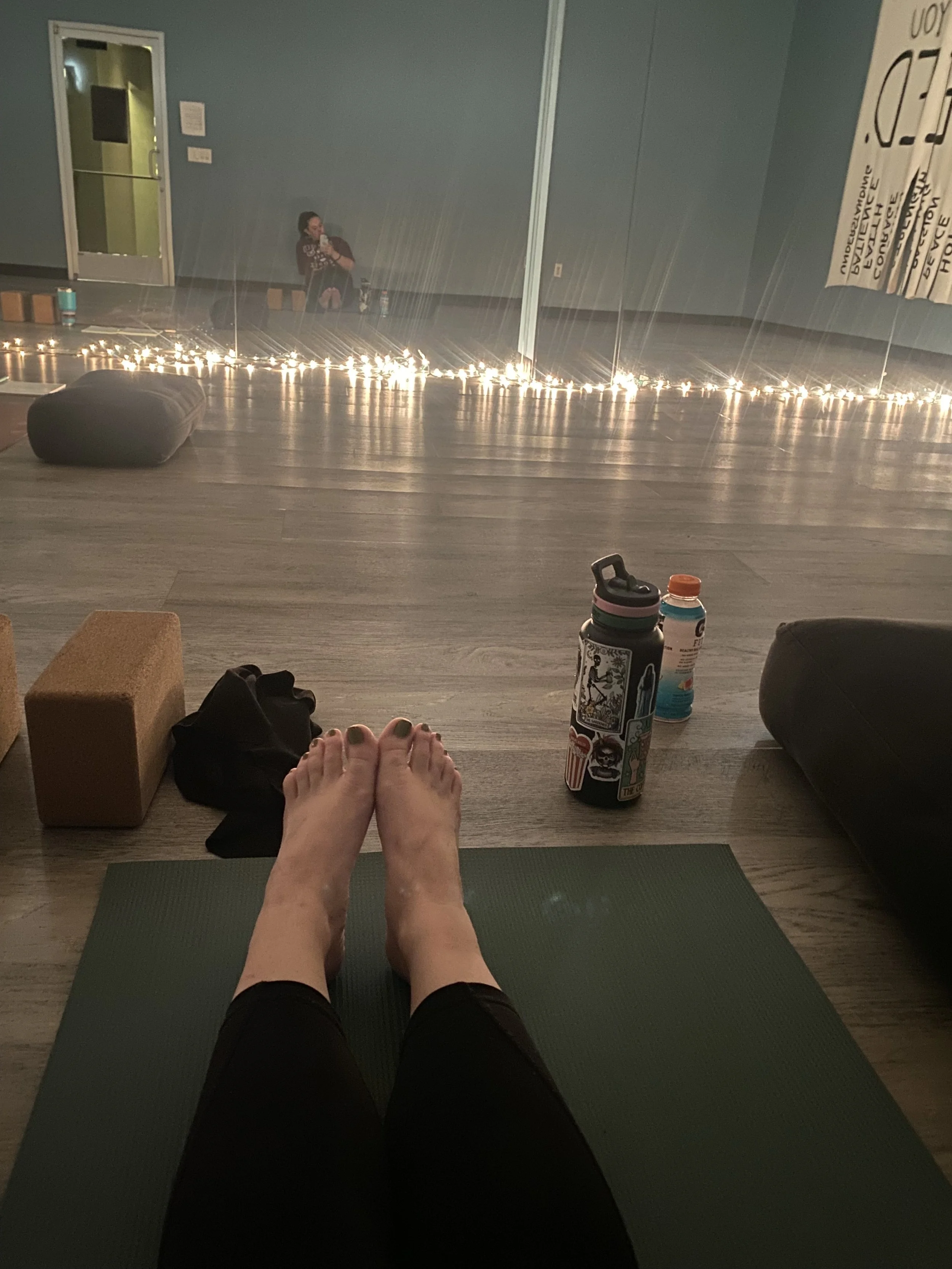
Taking a moment before yoga class, a reminder that boundaries begin with listening to yourself and showing up, even on the hard days.
When most people think of yoga, they imagine deep stretches, flowing sequences, or maybe that one impossible arm balance you’ve seen all over Instagram. But for me, yoga has always been about something deeper: learning how to respect and honor my boundaries. Not just the boundaries I set with others, but also the ones my body whispers to me (and sometimes yells at me) every single day.
Over time, I realized the lessons I was learning on the mat were the same ones I was reinforcing in therapy. Respecting pain signals, following through with commitments, and adapting practices to meet my actual energy levels are boundary skills that go far beyond a studio or a therapy room. They’re survival skills for anyone who struggles with people-pleasing, perfectionism, or overachieving.
So, what can yoga teach us about boundaries, and how can therapy confirm and expand those lessons? Let’s dig in.
How Yoga Taught Me About Therapeutic Boundaries
1. Respecting the Boundaries of Pain and Discomfort
If you’ve ever pushed yourself into a yoga pose just to “get it right,” you know what happens: your body protests. Maybe it’s a sharp pinch in your shoulder, a tug in your hamstring, or a strain in your lower back. At some point, your body sends the message: “This is too much.” In fact, this is how injuries occur in yoga, when you are more focused on what the pose looks like than on how the pose feels.
In therapy, we often discuss how ignoring your inner warning signs, such as exhaustion, resentment, or difficulty relaxing, can lead to burnout. The same is true on the yoga mat. Pain is not weakness; it’s communication. Discomfort says: “Pause. Reassess. Try something different.”
Respecting your body’s signals during yoga mirrors respecting your emotional signals in daily life. If you feel drained after saying “yes” to one more obligation, that’s your body telling you that you need to reassess that “yes”. If your shoulders lock up every time you agree to something you don’t want to do, that’s a boundary too.
Therapy confirmed this for me: You don’t have to push past your limits just because you think you “should.” You can listen, honor, and adjust. That’s not quitting; it’s wisdom, allowing you to practice in the long term.
2. Showing Up, Even When It’s a Hard Day
There are days when the last thing I want to do is roll out my yoga mat. I’m tired, stressed, or my inner perfectionist is busy reminding me that my case notes won’t get done any faster if I go to yoga. But here’s the truth: boundaries aren’t just about saying no, they’re also about saying yes to yourself. Choosing to go to class, even when you don’t feel like it, is a way of honoring the commitment you made to your own well-being. Attending a yoga class is just as productive as crossing off any item on my to-do list. Every time that I invest in myself outside the therapy room, I invest in my whole self.
Therapy echoes this lesson. Self-care isn’t always Instagram-worthy. Sometimes it’s gritty, unglamorous, and inconvenient. But boundaries mean showing up for yourself the way you would for a friend, partner, or client. When I step into a yoga class after a long day, I’m not just practicing physical poses; I’m practicing the art of prioritizing my needs. Therapy taught me to reframe this as not selfishness, but self-respect.
3. Modifying Poses to Match Your Energy
One of the most liberating things I learned in yoga was that child’s pose is always available. You don’t have to force yourself into warrior three if today you’re only capable of resting on your mat with your forehead on the ground. In my studio, we say, “No one cares if you lie down and cry for an hour, as long as you show up”. Modification is not failure; it’s a success in prioritizing the energetic and physical limits of your body. Basically, it’s boundary work. It’s saying: “This is what I have the capacity for right now, and that’s enough.”
In therapy, we use similar language when we talk about pacing yourself, avoiding overcommitment, and honoring seasons of rest. You don’t have to operate at 100% all the time. And sometimes, what looks like “less” from the outside is exactly what your system needs to recover. When you let yourself take the “easier” variation, you’re building the muscle of self-compassion. And trust me, that muscle is harder to strengthen than any asana.
4. Letting Go of Comparison
It’s almost impossible to be in a yoga class and not notice what other people are doing. Someone’s handstand in the front row looks effortless. Someone else folds forward like their hamstrings are made of rubber bands. And there you are, wobbling in tree pose when you could do it just fine yesterday.
When you ignore your own body to measure up to someone else, you’ve crossed a line against yourself. Comparing yourself is unproductive because it creates shame; however, being inspired by someone else’s practice is a lovely part of being in community with others.
Therapy helped me understand this even more: other people’s progress is not my business. My body, my history, and my energy levels all shape my practice. The same goes for boundaries in relationships, work, or family. You’re not required to keep pace with anyone else’s life. Your only job is to stay in a relationship with yourself. Yoga taught me to look inward. Therapy confirmed that this is a lifelong boundary practice.
5. Breathing Through the Hard Stuff
Breathwork is one of yoga’s foundational practices. And here’s the boundary lesson hidden in every inhale and exhale: your breath is always available to you. Without breath, you aren’t practicing yoga, and you aren’t living. When a pose feels overwhelming, your breath can guide you back to steadiness and re-regulate your overheated nervous system. Similarly, when anxiety spikes in everyday life, therapy reminds us to return to the breath as a way of anchoring ourselves in the present. Knowing that you have the right to slow down instead of rushing forward, to pause instead of reacting, to create space instead of collapsing under pressure, is the epitome of building trust in your ability to set flexible boundaries.
6. Recognizing That Boundaries Aren’t One-Size-Fits-All
Just like yoga postures can be adjusted for every body, boundaries look different for every person. One person’s “yes” is another person’s “absolutely not.” Yoga taught me to explore the edges of my flexibility and strength. Therapy taught me that boundaries shift depending on context, relationships, and seasons of life. What feels doable today might not tomorrow, and that’s okay.
The real lesson? Boundaries are fluid, not rigid. You get to decide, moment by moment, what works for you.
7. Carrying the Lessons Off the Mat
Yoga isn’t just what happens in a 60-minute class; it’s a way of relating to yourself and the world. Therapy reinforced that exact same thing. The way I honor my limits on the mat mirrors the way I protect my energy in relationships. The way I choose modifications mirrors the way I prioritize rest when I’m close to burnout. The way I show up for class mirrors the way I keep promises to myself. The mat is just a training ground. The real yoga and the real boundary work happen when you leave the studio.
Final Thoughts: Boundaries as Self-Respect
What yoga taught me about boundaries, therapy confirmed: listening to your body is not indulgent in any way, it’s necessary in every way. Respecting your limits is not weakness; it’s a strength. And choosing to care for yourself, even when it’s inconvenient, is the most important boundary you can ever set.
If you’ve been pushing yourself past your edges in yoga, in work, or in relationships, consider this your invitation to pause. To modify. To breathe. To say yes to yourself. Because boundaries aren’t barriers. They’re bridges.