Yoga Is More Than a Physical Practice: Honoring National Yoga Month
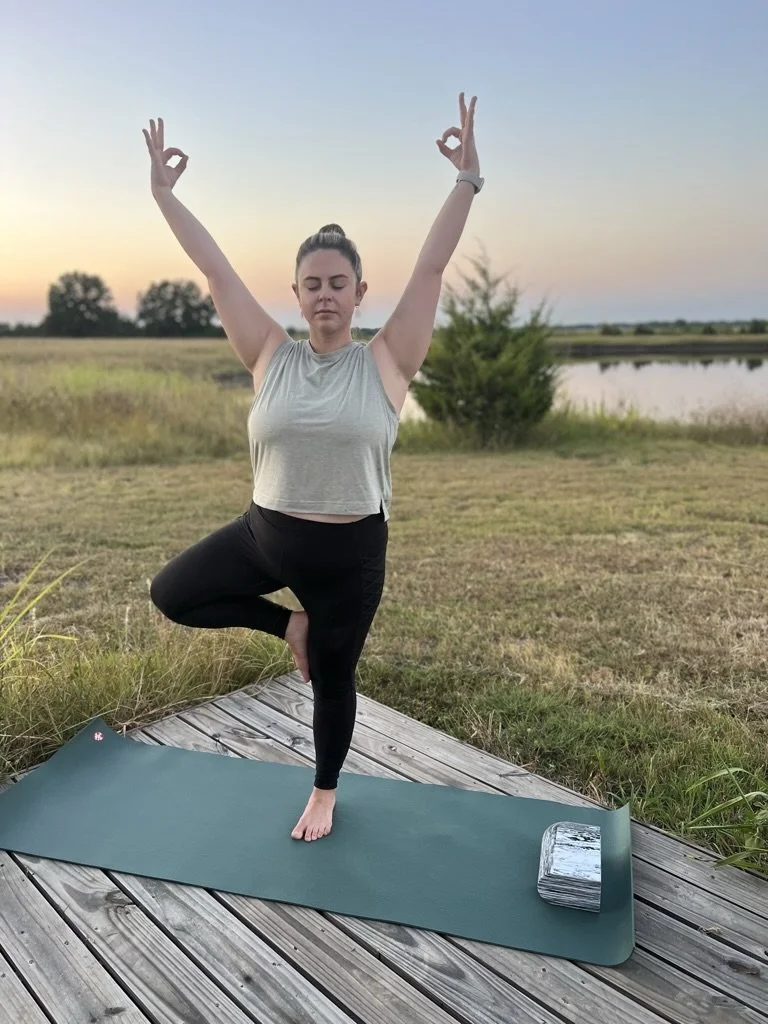
Aubrey Richardson, LPC in Texas, practicing yoga tree pose with a mudra, demonstrating how yoga supports balance, emotional regulation, and burnout recovery for therapists and caregivers.
When most people hear the word yoga, they picture stretchy pants with a designer logo, sitting cross-legged on mats, and a series of postures designed to tone the body. And while yoga certainly offers physical benefits like improved strength, flexibility, and balance, the physical practice is the least important aspect of yoga. Yoga is a holistic tool that connects the mind, body, and spirit. For many people, especially therapists, caregivers, and helping professionals, it offers a sustainable path to healing and resilience.
As we honor National Yoga Month, it’s worth remembering that yoga isn’t just a workout. It’s an emotional and sometimes spiritual practice that connects the breath to the body, offering benefits beyond the four corners of your mat. Outside the studio, yoga helps tone the vagus nerve, improves distress tolerance, enhances emotional regulation, deepens acceptance, and strengthens our ability to set boundaries. It also reminds us that we are part of something larger: a community of people who show up for themselves and each other.
Yoga and the Vagus Nerve: Building a Calmer Nervous System
The vagus nerve plays a crucial role in regulating the parasympathetic nervous system, often called the “rest and digest” response. When the vagus nerve is safely stimulated, heart rate slows, digestion improves, and the body feels grounded and connected.
Yoga practices like deep breathing (pranayama), chanting, and mindful movement gently tone the vagus nerve. Over time, this can help the nervous system respond with greater resilience to stress. For therapists and caregivers who live with the weight of others’ struggles, this vagal toning is more than a science experience; it’s a long-term survival strategy. Each time you pause to breathe deeply on your mat, you’re training your body to shift from hypervigilance into a calm presence. With continued practice, this social engagement system is strengthened over time for feeling secure, connected, curious, and joyful.
Yoga as a Distress Tolerance Practice
In therapy, especially in dialectical behavioral therapy (DBT) and trauma-informed work, distress tolerance is a vital skill of sitting with discomfort without immediately reacting. Instead, distress tolerance asks us to notice the discomfort without judgment and simply notice the sensations, thoughts, and feelings. Yoga mirrors this practice beautifully. Holding a pose like Warrior III when your legs start to shake or staying with your breath during a challenging vinyasa sequence is not just about building strength; it’s about building capacity to stay present with discomfort.
This embodied practice can translate directly off the mat: when a difficult client session or crisis arises, you already have the muscle memory of staying grounded in intensity rather than spiraling into overwhelm. Recently, I completed 108 sun salutations as part of my studio’s summer solstice event. While it was incredibly difficult, the endurance practice reminded me that I can notice my muscles shaking, the sweat dripping, and my breath starting to quicken without needing to immediately stop what I was doing. How helpful is that practice as I navigate uncomfortable conversations with clients?
Emotional Regulation and Acceptance
Yoga teaches us that thoughts and emotions will arise and that we can notice them without judgment. In meditation and movement, we learn to observe the stories the mind tells, the tightness in the chest, or the tears that surface without trying to push them away. And, in accepting our sensations, emotions, and thoughts as they are, we are not saying that we like it or that we agree with it. We are simply acknowledging the facts of the situation without any additional commentary.
This practice of observing and accepting throughout a flow is emotional regulation in real time: acknowledging emotions, naming them, and letting them pass rather than letting them drive the bus. On the mat, you’re allowed to feel what you feel and practice holding it with compassion without needing to change anything. For helping professionals who are often told to “leave emotions at the door” (which is bullshit by the way), yoga can be a safe container for practicing the gargantuan task of acceptance.
Showing Up for Yourself: Boundaries On and Off the Mat
Yoga is not about perfection. It’s about practice. Each time you step on the mat, even if your mind wanders or you fall out of a pose, you are practicing showing up for yourself and respecting your body’s needs. For therapists and caregivers who constantly prioritize the needs of others, this act of presence is radical. It says: I matter too. My breath, my body, my healing are worth tending to.
This isn’t selfish. It’s necessary. Yoga teaches perfectionists and people-pleasers better boundaries. You learn to respect the limits of your body, knowing when to deepen a stretch and when to pull back. You learn to say “this is enough” and sit back into a child’s pose without shame. I learned to say no to working late so that I don’t miss my favorite evening class and pay the late cancellation fee (aka respecting the boundaries my studio asks of me). That boundary practice doesn’t stay on the mat. It carries into your work, relationships, and caregiving roles. By respecting your limits, you model to others that self-preservation is not weakness but wisdom.
Yoga as a Path to Community
While yoga can be an individual practice, it is also deeply communal. Studios, online classes, and group practices bring together people of different ages, backgrounds, and life stories. For helping professionals who may feel isolated in their roles, the yoga community offers a space where everyone shows up as learners, equals, and fellow travelers on the path. Community practice reminds us that wellness is not built alone; it’s supported by connection, accountability, and shared presence.
Additionally, yoga offers our bodies the opportunity for interpersonal co-regulation with fellow yogis and the instructor. The instructors’ use of breath and gentle guiding through difficult poses communicates a willingness to sit with our distress that we can connect with. With intention and time, this ability to receive calm energy from others builds our ability to self-regulate and build on intrapersonal regulation.
Why Yoga Matters for Therapists and Caregivers
Therapists, nurses, doctors, teachers, and other helpers often live in a cycle of giving more than they receive. Yoga offers:
A reset button for the nervous system (through breath and vagal toning)
A practice ground for distress tolerance and emotional regulation
A mirror for boundary-setting
A safe space to show up imperfectly and be accepted
A community of practice that reduces isolation
An opportunity to enjoy the journey more than the outcome
For helping professionals, yoga is more than exercise. In fact, yoga as exercise is the least interesting part. The yoga studio is one of the few places where you can step out of the role of caretaker/parent/helper and simply be a human being.
Celebrating National Yoga Month
This September, in honor of National Yoga Month, consider exploring how yoga might serve you beyond the physical.
Try a beginner-friendly class, online or in person (link to resource guide)
Experiment with simple breathwork (like box breathing or alternate nostril breathing).
Reflect on how your mat practice mirrors your boundaries, emotional regulation, or distress tolerance in a journal or with a trusted friend.
Notice the community that forms when you practice with others.
Remember: yoga is not about flexibility or perfect poses. It’s about building resilience, compassion, and presence, tools that every therapist, caregiver, and human needs to navigate the complexities of life. And, as one of my favorite yogis says, “how you show up matters”.
Cultural Roots of Yoga
As we celebrate National Yoga Month, it’s important to honor the cultural roots of yoga. Yoga originated in South Asia as a spiritual and philosophical tradition, not just a form of exercise. In Western culture, yoga is often appropriated and marketed primarily as a workout or wellness trend, which can strip away its depth and erase the communities that created it. Practicing yoga with respect means using language thoughtfully, crediting lineages and teachers, and amplifying South Asian voices. If this practice supports you, consider learning beyond postures like exploring breath, meditation, ethics, and service while paying and citing South Asian teachers, and choosing studios that demonstrate cultural humility and access. Appreciation, not appropriation, keeps the heart of yoga intact.
Final Thoughts
Yoga is more than movement. It’s a practice of connection to self, to others, and to the present moment. For therapists and caregiving professionals, it is one of the most accessible ways to regulate the nervous system, practice boundaries, and honor the truth that your well-being matters. So this National Yoga Month, may you step onto your mat not just to stretch your body, but to expand your capacity for care, starting with yourself.
If you’re a therapist or caregiver in Texas navigating burnout, I’d love to support you in weaving practices like yoga into your healing journey. Schedule a session here.