Out of the Darkness 2026: A Day of Community & Remembrance
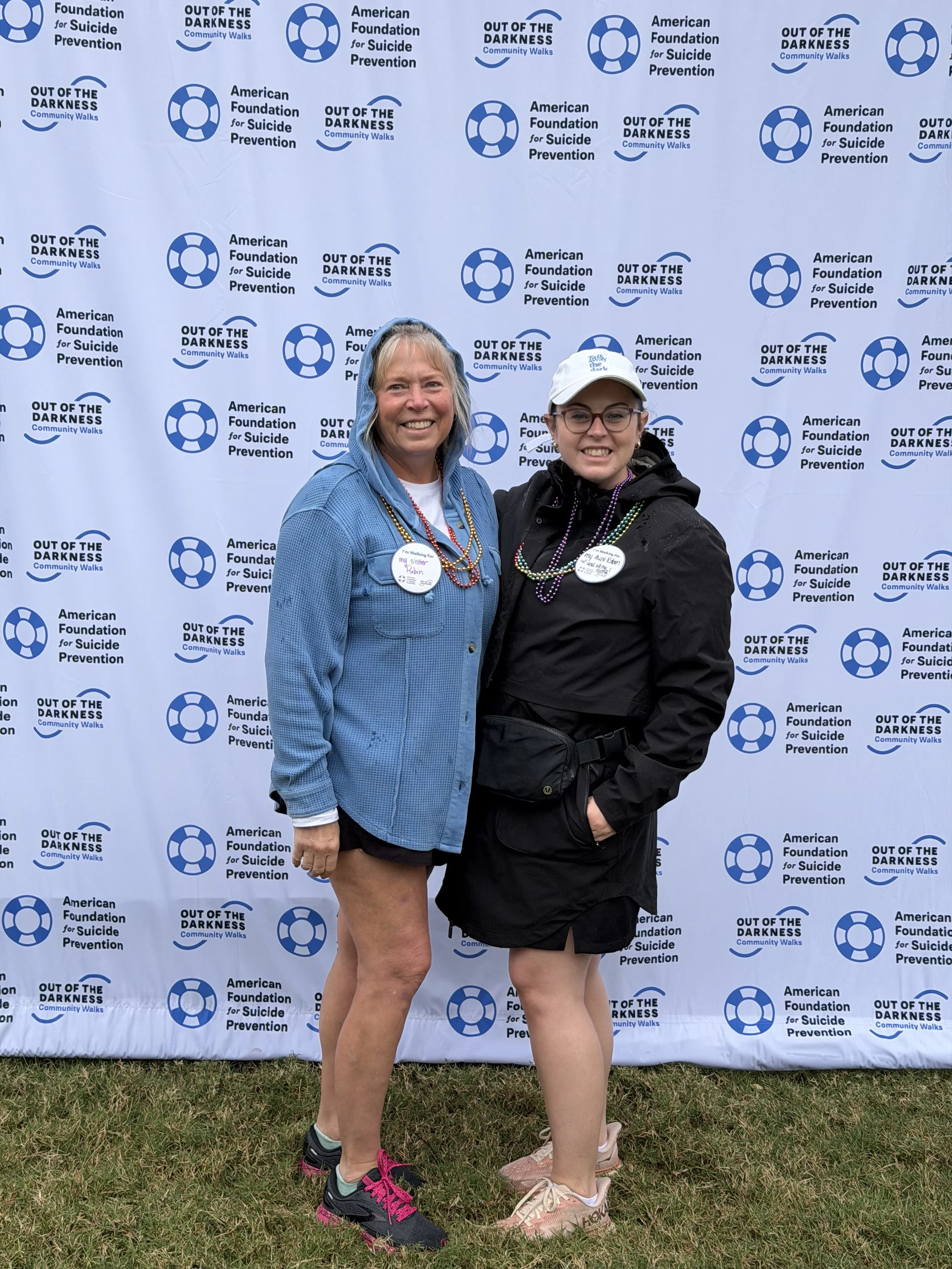
In 2023, my family lost my aunt, Robin, to suicide. This month, my mom and I walked in her honor at the Out of the Darkness Walk, surrounded by others carrying their own stories of loss and love. Grief like this never disappears, but it becomes lighter when we carry it together.
If you’ve lost someone to suicide, you’re not alone.
Call or text 988 for the Suicide & Crisis Lifeline, or visit afsp.org for survivor resources.
You don’t have to hold this alone.
On November 1st, I participated in the American Foundation for Suicide Prevention (AFSP) Out of the Darkness Walk with hundreds of other people from Collin and Denton counties. It wasn’t just any Saturday; it was a day of remembrance, community, and a kind of healing that only happens when we show up and walk side by side. Previously, I had participated in this event as a therapist, but this would be my first walk as a survivor of suicide loss. I walked with my mother as part of a team called In Robin’s Honor, named for my aunt who completed suicide in 2023. That loss still lives in the air between us, in the silence, the laughter, the shared looks when words don’t quite reach far enough. Walking that morning wasn’t about answers. It was about connection. About letting our grief take shape alongside hundreds of others carrying names, photos, and memories of people they love. Each step was a reminder that while grief is deeply personal, it’s also profoundly collective.
The Kind of Grief You Carry Quietly
Losing someone to suicide changes you. It asks impossible questions, and the answers never come neatly. There are days when the grief feels quiet, and others when it feels like a storm. What I’ve learned since my aunt’s death is that surviving suicide loss isn’t about “moving on.” It’s about moving with, learning to live in the space where love and pain coexist.
For many survivors, the hardest part isn’t just the loss itself, but the loneliness that can follow. Suicide loss can feel different from other forms of grief. There’s confusion, guilt, sometimes shame, and always a deep ache for the person who should still be here. The walk reminded me that we don’t have to carry that alone.
Every person holding a sign, every team in matching T-shirts, every hand squeezed tight before the opening ceremony , they were all proof that healing happens in community.
What It Means to Show Up
The Out of the Darkness Walk isn’t just about remembrance; it’s about visibility. It’s saying, We’re still here, and so are the people we love. It’s about breaking silence in a world that still doesn’t know how to talk about suicide, grief, or mental health without discomfort.
Out of the Darkness offers opportunities throughout the morning to honor your loved ones and spread messages of hope for survivors. One of the most unique aspects is that the AFSP passes out beaded necklaces to wear, with different colors corresponding to different reasons for walking. For example, green beads represent a personal struggle with mental health, and orange beads represent losing a sibling. During the opening ceremony, each person was asked to raise their beads in solidarity for other survivors.
Even though the day started cloudy, cold, and rainy, it did not stop anyone from wearing their matching team t-shirts, sporting AFSP gear, wearing personalized “I walk in honor” buttons, and offering an environment of healing. Before the walk started, the event offered multiple opportunities to honor your loved one through personalized buttons, painting memorial rocks, and a remembrance wall. I painted a memorial rock for my mom to keep (I have better handwriting and artistic skills) and another for my surviving aunt, who participated from afar. It was a beautiful sight to see the rocks with supportive messages and kind thoughts from loved ones; somehow, it made me feel less alone to know that others were carrying these real and metaphorical burdens.
As a therapist, I spend a lot of time reminding people that asking for help is an act of courage, that it’s okay to not be okay. But this walk reminded me that community care isn’t just something I talk about with clients; it’s something I need, too. Healing is not a solo activity. It’s a shared one.
That morning, surrounded by families, friends, survivors, and supporters, I saw what community care looks like in real time as people show up for one another not because they can fix the pain, but because they refuse to let anyone carry it alone.
Carrying Her Forward
There’s a quiet power in naming our loss out loud. Talking about my aunt feels like both a wound and a prayer. Grief doesn’t get lighter, but it changes shape when we share it. As we walked the three miles through a park, decorated with various signs with inspiring messages and statistics about suicide, my mom and I shared stories about my aunt as well as connected with strangers over their similar experiences. Our grief became something we can hold together.
Since that day, I’ve found myself thinking about how often helpers, therapists, and caregivers experience loss but keep it contained, hidden behind professionalism or emotional resilience. But the truth is: even the helpers need space to fall apart sometimes.
Grief is not a weakness. It’s a continuation of love.
If This Day Hits Close to Home
If you’re reading this and you’ve lost someone to suicide, please know this: you’re not alone, and there’s no right way to grieve. You don’t have to be “strong.” You don’t have to make sense of it. You just have to keep breathing and let others walk beside you when you can’t take the next step alone.
If you or someone you know is struggling:
Call or text 988 to reach the Suicide and Crisis Lifeline (24/7, free, and confidential)
You can also chat online at 988lifeline.org
For survivors of suicide loss, the American Foundation for Suicide Prevention (AFSP) offers support groups, resources, and events at afsp.org
You don’t have to hold this alone.
A Note to Fellow Helpers
To every therapist, caregiver, or healer who has walked this kind of grief while still holding space for others, I see you. There is no shame in needing help yourself. Showing up for your own pain doesn’t make you less capable of helping others. It makes you human. And sometimes, that’s the most healing thing of all.
If this resonates with you, or if you’re a helper navigating grief, burnout, or compassion fatigue, you don’t have to navigate it in isolation. You can schedule an initial consultation HERE or learn more about my work HERE.
Because healing doesn’t happen in silence, it happens together, one step at a time.