The Mental Load of Back-to-School: Why August Is Exhausting Before the School Year Even Begins
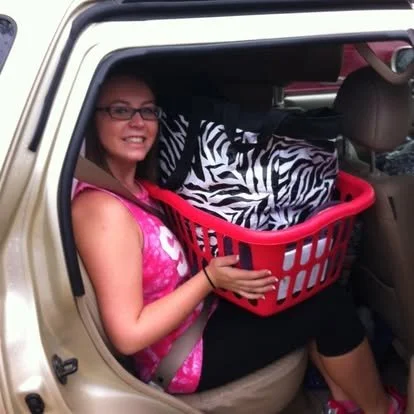
Apparently, my personal back-to-school strategy was “put it in a laundry basket and hope for the best.” The mental load behind getting a family ready for a new school year is a little more complicated.
It is August, and somehow mothers everywhere have acquired a new unpaid part time job: Back to School Project Manager.
The school year has not even started yet.
But there are supply lists to decipher. Clothes to inventory. Shoes to replace. Forms to complete. Physicals to schedule. Medications to send to the nurse. After school care to coordinate. Calendars to sync. Teachers to meet. Lunches to plan. Activities to register for. Transportation to figure out.
And, of course, approximately 900 emails to read that require adding dates to your calendar and more to your mental to-do list…
No wonder August feels exhausting before the first day of school even arrives.
This is the mental load of motherhood in one of its busiest seasons. And while the internet is full of back to school hacks promising to help us “do it all,” maybe we need to question why mothers are expected to do it all in the first place.
The Back to School Mental Load Is More Than a To Do List
Invisible labor is not just completing tasks that aren’t necessarily “seen”, but it is being the person who knows the tasks need to happen at all.
Buying school supplies is labor. But so is remembering that the list was posted in the parent portal, noticing that one child needs a different type of binder this year, comparing what we already own, figuring out when to shop, buying each child’s favorite colors, and making sure everything actually gets into the backpack.
The mental load lives in the anticipating, remembering, planning, noticing, and coordinating. And, unfortunately, mothers still disproportionately carry that work.
This is part of why people-pleasing and over-functioning can become so exhausting. We are not only responsible for what is happening right now, we are also responsible for what happens next. Therefore, we are constantly scanning ahead to prevent future problems. Our mind is always racing with thoughts like:
Did we sign the form?
Does the lunchbox still fit?
Who has pickup on Wednesday?
Wait, when is picture day?
Nothing has technically gone wrong. But, our brains have already worked a full shift.
We Do Not Need Another Hack for Doing It All
One quick look through my Instagram For You page shows that back to school is in full swing. My feed is full of endless systems designed to help mothers become more efficient and manage it all. Sometimes this is more explicit with new AI tips to automatically sort your inbox and flag emails that require a response. But, this push to be as productive as possible can also look like the reels full of Sunday resets and DITL with hacks that ask us to do even more:
Color code the calendar.
Meal prep on Sundays.
Create a drop zone.
Wake up earlier.
Make a command center.
Use this app, program, or website
Buy these bins.
Prepare everything the night before.
Some of those things may genuinely make life easier. Trust me, there is nothing wrong with a good system. But there is a problem when the solution to an unreasonable amount of labor is helping women become better at performing the unreasonable amount of labor, especially during the back to school season.
Generally, we have turned structural overload into a personal organization problem. If we are overwhelmed, surely we just need a better planner that has space for to-do lists, meal planners, grocery lists, and individual chore charts on the fridge so that “my husband knows what’s for dinner”.
If we are exhausted, maybe we need a better morning routine that includes 10 skincare steps, a full lymphatic massage, and a workout by 5am so that our needs don’t interfere with the schedule (god forbid).
If we cannot keep track of everything, apparently we need matching baskets, a label maker, and a house manager on the payroll.
False.
Sometimes there is simply too much to keep track of.
Burnout recovery cannot only be about becoming more efficient at carrying an unsustainable load. We cannot be the glue that keeps an unstable system from falling apart. And just because other people benefit from our polished and palatable trauma-responses, doesn’t mean that we should continue to keep our labor and mental load invisible.
What If the Goal Is Not Doing It All Better?
The answer to the mental load is not necessarily figuring out how to hold more, but rather learning to put some of it down.
That might mean having honest conversations about who notices, plans, remembers, and follows through in our families. It might mean letting another capable adult own a responsibility from beginning to end instead of “helping” or “reminding” after we assign the task, explain it, and remind them three times. It might mean stronger boundaries around what actually deserves our energy.
And yes, sometimes it means accepting that something will not be done exactly the way we would have done it. Worst case, we may have to accept that our current relationships may disappoint and hurt us.
While this can be deeply uncomfortable for those of us who have built identities around being reliable, prepared, helpful, and competent, it is the only permanent solution for the beginning of the school year exhaustion behind all the moms’ eyes.
The goal was never to become the most organized & exhausted person in the school pickup line. The goal is to have lives where we are not expected to be constantly in charge of everything.
If the mental load, people pleasing, perfectionism, and overfunctioning have left you exhausted before the school year even begins, therapy can help us examine why we carry so much and practice putting some of it down. Luckily, I’m booking free consultation calls and accepting new clients.