Why Can't I Relax on Vacation? Burnout, Perfectionism, and the Need to Be Productive
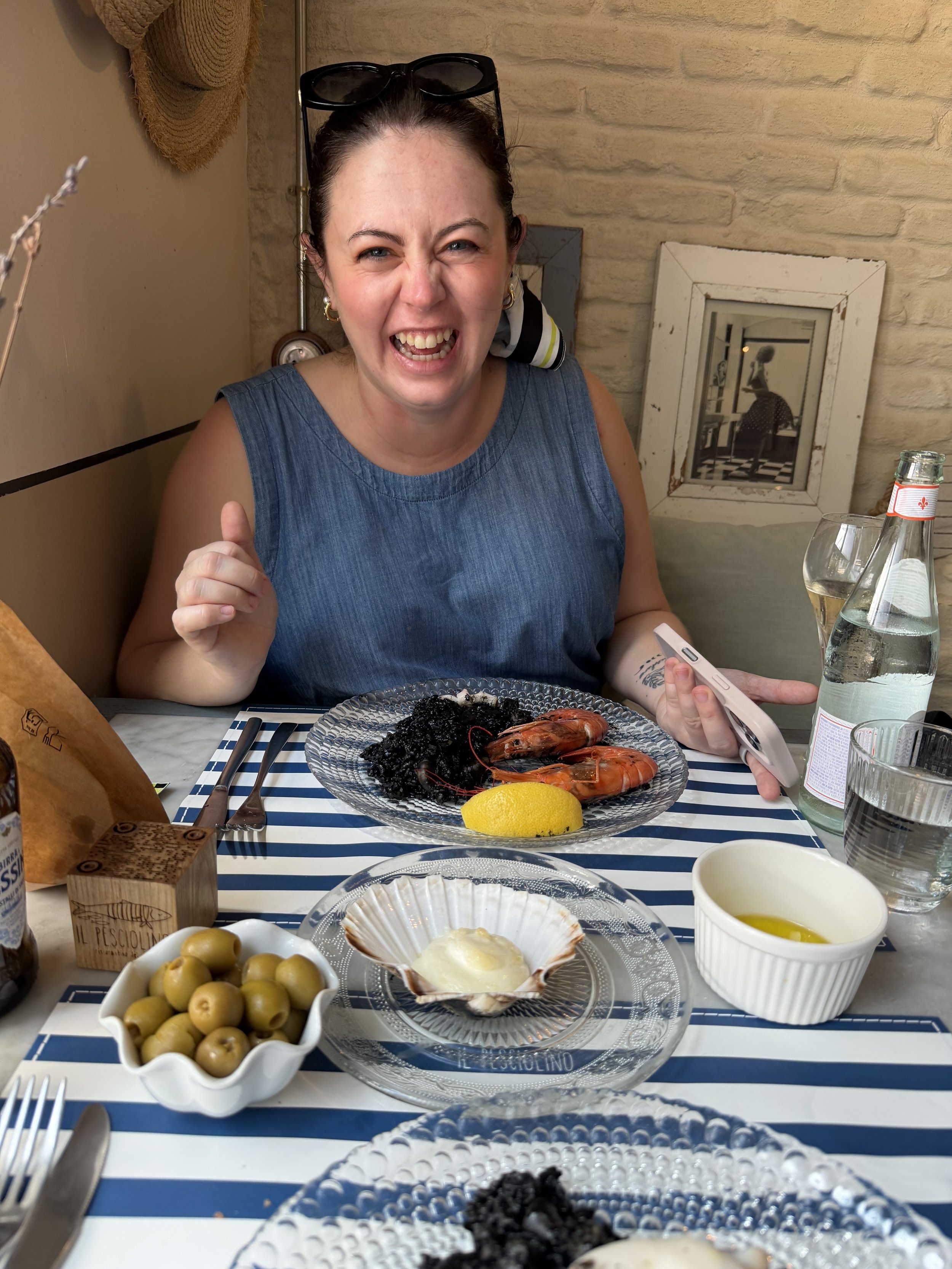
Not me, to be clear. 😂 I am VERY capable of vacationing. But for a lot of high achievers, taking PTO doesn’t mean the pressure to be productive magically disappears. Sometimes we just take the overfunctioning ✨internationally.✨
We finally get the time off.
The out of office message is on. The suitcase is unpacked at the hotel. There is nowhere we technically have to be.
And somehow, we are still checking email.
Instead of being present on vacation we start:
Making mental lists from the pool
Thinking about what needs to happen when we get home
Wondering whether we are wasting the day by sleeping late or taking an afternoon nap
Feeling vaguely guilty that we did not make a dinner reservation, see enough sights, finish the book, get enough sleep
Questioning if we properly maximized the vacation we specifically took because we were exhausted
We said that we wanted to rest. So why can't we actually relax on vacation?
For many of us, especially high achievers, therapists, healthcare professionals, caregivers, and chronic people pleasers, the problem is not that we do not know how to take time off. The problem is that we have spent years learning that we find safety and connection from what we accomplish, manage, anticipate, and provide for everyone else.
Taking PTO does not automatically turn that off, especially if we’ve never stopped to retrain our nervous systems.
Why We Can't Relax Even When We Finally Have Time Off
Burnout is not just having too much to do. Sometimes it is becoming so accustomed to functioning at maximum capacity that slowing down starts to feel uncomfortable.
We spend most of our lives moving from one responsibility to the next. We solve problems. We anticipate needs. We keep track of details. We answer messages. We make the appointments. We remember what everyone else forgot.
Then vacation arrives and suddenly we are supposed to stop. While our calendar might understand that concept, our brain, nervous system, and body may not.
When productivity becomes part of our identity
There is a difference between enjoying accomplishment and needing accomplishment in order to feel okay about ourselves. For many high achievers, productivity has quietly become evidence that we are responsible, competent, valuable, needed, or good. We are not simply doing a lot.
We have learned to understand ourselves through how much we do. That makes rest both extremely desirable and complicated.
If being productive makes us feel worthy, what happens when we are doing absolutely nothing?
If being needed makes us feel important, what happens when everyone manages without us?
If we are used to earning rest by finishing everything first, what happens when there is always something else that could be done?
We can book the vacation.
But, we cannot automatically leave our behaviors and patterns at home.
We can overfunction on vacation too
Overfunctioning does not disappear because the scenery or time zone changes. Sometimes we simply give it a vacation itinerary.
How to Spot an Overfunctioning Person on Vacation: You will see them
Researching every restaurant.
Making reservations for every meal
Coordinating everyone's schedules
Packing everything anyone could possibly need.
Checking the weather
Managing transportation
Keeping everyone happy
Reminding everyone to take the pictures
Talking about making sure we are "making the most" of every day.
Basically, we become the cruise director of our own recovery then we wonder why the trip did not feel restful.
The same can happen with pleasing people. We spend our supposed time off making sure everyone else is having a good time while remaining completely disconnected from what we actually want. Burnout recovery requires more than changing our location. It requires changing our relationship with responsibility.
The Cost of Turning Rest Into Another Thing to Accomplish
When we cannot stop being productive, even our recovery becomes work.
We start optimizing sleep.
Maximizing vacation.
Scheduling relaxation.
Trying to be good at resting.
And suddenly rest has another performance review.
We never actually leave work mode
This matters because a body that is physically away from work is not necessarily experiencing rest.
We can be sitting on a beach while mentally rehearsing Monday morning.
We can be at dinner while checking notifications.
We can spend the last two days of vacation while thinking about how quickly the trip went and everything waiting for us when we return.
That is not a failure to appreciate vacation. It is simply information about how we’ve learned to interact with the world.
If we have been chronically overextended for months or years, (or our entire life) a few days off may reveal just how difficult it has become for us to disengage from responsibility. Notably, this is especially important when we are experiencing therapist burnout or burnout in another helping profession.
When our work trains us to notice what other people need, hold emotional space, remain responsive, and tolerate significant responsibility, we can become incredibly skilled at staying externally focused. Then we get time to ourselves and realize we have no idea what we need.
We come home needing a vacation from our vacation
The cost is not just that we miss a few peaceful afternoons.
We can spend thousands of dollars and precious PTO recreating the exact dynamics that exhausted us at home.
Too much responsibility.
Too many expectations.
Too little flexibility.
Not enough boundaries.
Constant attention to what everyone else needs.
Pressure to make every moment count.
Then we return home frustrated because the vacation was supposed to "fix" our burnout and somehow did not. But burnout recovery was never going to come from finding the perfect resort, morning routine, packing list, or self care strategy. We cannot self care our way out of a life that repeatedly requires more from us than we have capacity to give. And we cannot vacation our way out of patterns we carry with us.
What If Vacation Did Not Have to Be Productive?
Maybe the goal is not to become better at relaxing.
Maybe we need to question why doing nothing makes us so uncomfortable in the first place.
→ That is a very different conversation.
Instead of asking, "How do I make myself relax?" we can start asking:
What do I believe will happen if I stop being productive?
Who am I when nobody needs anything from me?
Why does an unstructured afternoon feel wasteful?
When did rest become something I had to earn?
Why am I responsible for making sure everyone else enjoys this trip?
What would I choose today if I did not have to justify the choice?
Those questions take us beyond vacation planning and into the patterns underneath it.
Rest is not another reward for good behavior
Rest does not have to be earned by reaching our breaking point.
We do not need to finish everything first.
We do not need to be exhausted enough.
We do not need to make our vacation impressive, productive, educational, transformative, or Instagram worthy.
We are allowed to read by the pool for four hours.
We are allowed to order room service.
We are allowed to skip the excursion.
We are allowed to spend money on a trip and still take a nap.
We are allowed to have an entire afternoon with absolutely nothing to show for it.
That does not make the time wasted.
That might actually be the point.
Burnout recovery means practicing a different relationship with ourselves
Real burnout recovery is not about squeezing better coping skills into an already overloaded life.
It can mean examining the perfectionism, people pleasing, overfunctioning, and lack of boundaries that keep us in a constant state of responsibility.
It can mean noticing how often we override our own needs because someone else's feel more urgent.
It can mean learning that discomfort does not automatically mean something is wrong.
Sometimes doing less will feel uncomfortable precisely because we have spent so long believing that more is what makes us valuable.
We do not have to wait until our next vacation to practice changing that.
We can begin building a life where rest is part of the infrastructure, not the emergency response.
And if the idea of doing less brings up guilt, anxiety, or the immediate urge to explain why that is impossible, that might be exactly where the work begins.
If burnout, perfectionism, people pleasing, and overfunctioning are making it difficult to rest even when we technically have the opportunity, therapy can help us look at what is keeping the cycle going.
Schedule a consultation:https://www.sageholisticcounseling.com/booking
The consultation link is also available in my bio.
For more on burnout recovery, boundaries, people pleasing, and building a life that does not require us to constantly run on empty, visit: